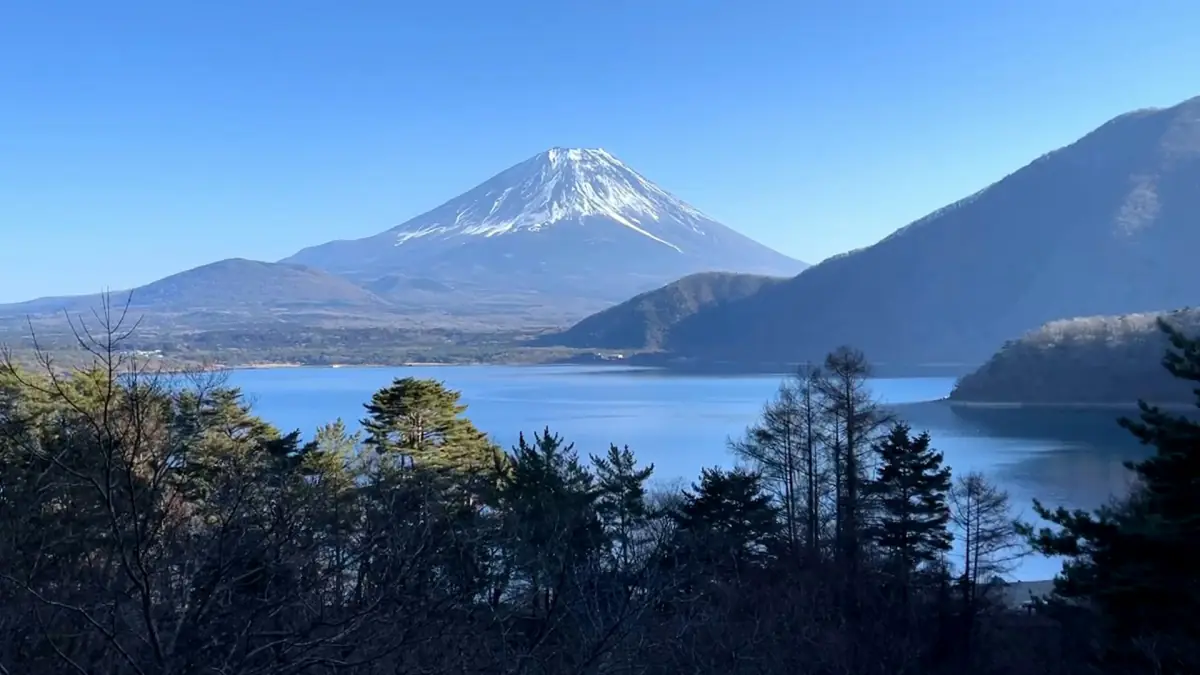
Choosing the best place to see Mount Fuji
The best place to see Mount Fuji is a choice between different settings: Chureito adds a pagoda and the city, while the northern shore of Motosuko places water and wooded slopes in front of the mountain. Shojiko offers another lake setting, with the Eboshi-dake panorama platform among the viewpoints identified by Japan’s national tourism organisation. Choose the composition first, then organise the journey around it.
For an initial visit, select a main viewpoint and leave room for weather changes rather than trying to collect every angle. A clear photograph from another season is useful for recognising a location, and records conditions on the day it was taken. The Fuji Five Lakes overview explains how the lake destinations fit into a regional journey.

Chureito, Motosuko and Shojiko compared
Chureito is in Arakurayama Sengen Park in Fujiyoshida. The local tourism organisation gives 398 steps to the viewing platform and about 25 minutes on foot from Shimoyoshida station. Include the walk, pauses and return in your schedule. Read the Chureito visiting guide before choosing it as a brief stop between trains.
The northern shore of Motosuko is a named Fuji viewpoint, and Motosuko is the deepest of the five lakes. Shojiko is the smallest; its Eboshi-dake panorama platform gives you a different location to consider. A platform reached on a hillside and a stop beside a lake have different walking demands. Consult local route conditions before committing to a hillside walk.
Our picks: Viewpoints
This early outing includes private transportation.
Hand-picked tours, booked through Viator. Prices are indicative starting prices in US dollars (as of October 2026). Tap a tour for live availability and the current price in your currency.

Early photo spot outing
Start from Shimoyoshida for an early photo-focused trip with private transportation; visibility depends on the day.
An early photo outing from Shimoyoshida
The early morning photo spot outing starts in front of Shimoyoshida station and has a listed duration of five hours. Private transportation is included. It suits visitors who want an organised way to approach a photo-focused morning from this local starting point. Choose it for that format rather than treating an early start as a promise of sunrise. Other early departures are compared in the Mount Fuji sunrise tours guide.
Keep the meeting location in mind when arranging accommodation or an incoming train. A local departure and a day trip from Tokyo require different plans. For departures from the capital, use the Tokyo day trip guide; for independently arranged connections, see getting to the Fuji area.
Mount Fuji visibility and changing conditions
The JMA climate normals for 1991 to 2020 support a drier winter pattern at the lake-area measuring station. They do not give a percentage chance of seeing Fuji. Cloud and the conditions on the day still matter, so neither a winter date nor a morning departure secures a clear mountain outline.
Use the weather page for climate context and a current forecast for the actual outing. Keep a nearby alternative that you would enjoy even with the summit hidden. The mountain’s visibility and the safety of a route are separate decisions; a clear sky does not establish that a hillside path is open.
Lake Kawaguchi
For the lake’s individual viewpoints and local visitor planning, continue with Lake Kawaguchi. Treat that as a distinct local stop when building your wider Fuji route. Decide whether a lakeside setting or the elevated pagoda setting is your priority before adding onward travel.
Oishi Park
The park belongs in a lakeside plan rather than a race through every northern viewpoint. Use Oishi Park for the specific destination. If your main purpose is a mountain photograph, allow time to enjoy the foreground too; it gives the visit a focus when clouds cover the peak.
Sunset, daylight and different elevations
Sunset is a possible time to look at the landscape, not a universal best photography hour. Select your return connection before settling into a long wait for changing light. For a visit involving steps, leave room to return comfortably instead of using the last available connection as your only plan.
A viewpoint near the mountain’s base is a different outing from the fifth station. Higher access depends on road and weather conditions. Summit climbing belongs only within the officially open season; avoid an off-season climb as an improvised way to find a view.
Frequently asked questions
Which viewpoint includes the pagoda?
Chureito in Arakurayama Sengen Park combines the pagoda, city and Fuji in the view. Allow for the 398 steps and a comfortable return.
How should I plan winter visibility?
Winter climate patterns do not guarantee visibility. Use a current forecast and keep a plan that still works when the mountain is hidden.
Is the early photo trip a summit sunrise climb?
It is an early photo spot outing starting at Shimoyoshida with private transportation. Plan it as a local sightseeing format, with a separate decision for any mountain activity.