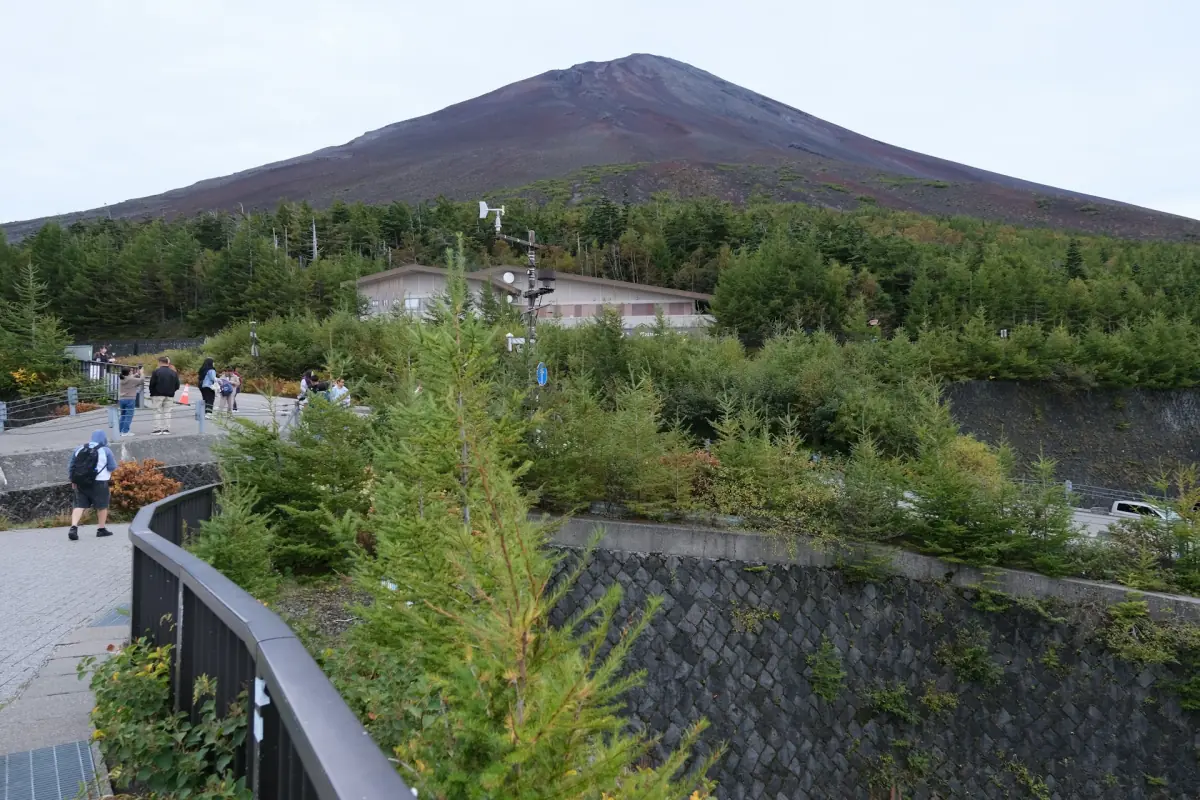
Mount Fuji 5th Station: choose the correct approach
The Mount Fuji 5th Station reached by the Subaru Line belongs to the Yoshida approach. Fujinomiya, Gotemba and Subashiri have different fifth stations, so a station name alone is not enough to plan transport. Choose the approach before choosing a bus or excursion. A sightseeing stop here gives time around the station; a summit climb requires its own seasonal planning.
Use this page for the Subaru Line visit. The Subaru Line 5th Station has its own Mount Fuji 5th Station Tourism Association. For a longer mountain journey, read the climbing guide. A station excursion suits visitors who want to experience the mountain setting without undertaking a summit ascent.

Our picks: Fifth-station outings
Choose round-trip coach transport or a bullet train return. A fifth-station visit is not a summit climb.
Hand-picked tours, booked through GetYourGuide and Viator. Prices are indicative starting prices in US dollars (as of October 2026). Tap a tour for live availability and the current price in your currency.

Fifth station and Hakone with bullet train return
- Ticket for Hakone Ropeway; Ticket for Lake Ashi Cruise
- 1-way Bullet Train Ticket from Odawara Station to Tokyo Station
On weekends, national days off and other designated days departure is from Shinjuku only. The fifth-station visit is not a summit climb.
Check availability →
Fifth-station area outing
- In-person Guide
- Round-trip transfers to and from the meet up location
Arrive 15 minutes before departure. The fifth-station visit is not a summit climb.
Check availability →
Day trip towards the fifth station
- Vehicle fuel costs, tolls, and highway tolls
- Driver service fee
Small groups have a driver-guide; the bus tour has a licensed guide. A fifth-station visit is not a summit climb.
Check availability →Station excursions and regional trips
Compare station visits by meeting point, transport and the Hakone activities included in the particular excursion.
Excursions with different inclusions
The coach excursion combining the station with Hakone includes an English-speaking guide, onboard Wi-Fi, Hakone ropeway and Lake Ashi cruise tickets, plus a one-way bullet train ticket from Odawara to Tokyo. Its published duration is ten hours. Buffet lunch belongs only to the lunch option. Departure is from the designated Ginza or Shinjuku meeting point according to the booking; hotel pickup is excluded. On weekends, Japanese national days off and specified dates, the Ginza departure is unavailable.
The station-and-Hakone trip with an outlet stop lasts eleven hours and includes the Hakone ship and ropeway tickets. The separate station sightseeing option with a guide and meeting-point return transfers has a published duration of nine to ten hours and had no reviews in the November 2026 selection. Another ten-hour station excursion had nine reviews; its small-group version provides a driver-guide, while the bus version provides an in-person certified guide. These are landscape outings rather than summit climbs. Compare Fuji and Hakone combinations for the different day formats.
Subaru Line toll and payment
The road tariff recorded on 3 November 2026 lists 2,800 JPY for a standard car covering the full return journey. This is a vehicle toll, rather than a per-person admission charge or climbing fee. The road accepts cash and its own multiple-use tickets, with credit cards and ETC excluded. Prepare the payment for the road separately from money for onward activities.
For the completed 2026 summer restriction, private-car access was limited from 3 July at 18:00 until 10 September at 18:00. Visitors changed to shuttle or taxi at Fujisan Parking. That dated arrangement is useful background for summer planning; later seasons need their own published traffic rules.
Scheduled bus or organised transport
The scheduled service from Kawaguchiko or Fujisan is distinct from the parking-area shuttle. From 1 July 2026 its listed adult fare was 3,400 JPY return or 2,000 JPY one way, with child fares of 1,700 JPY return or 1,000 JPY one way. The online sales window on the recorded page ended on 30 October 2026. Use the timetable issued for your travel date rather than treating that sales period as a winter service promise.
Road conditions affect bus access. A closure can cancel the service; when access reaches only the fourth station, the bus can turn there. For reaching the region first, see transport to Mount Fuji. Leave space in the day for the return connection instead of linking a weather-dependent mountain visit to a tight onward departure.
Weather and the boundary with climbing
The annual road-hours table is a planning reference, while weather and road conditions determine actual access. Confirm the road conditions for the date of travel as part of your departure planning. Build an alternative lower-elevation outing into your plan and use the weather guide to understand the difference between the lakeside and summit climate.
Fuji visibility remains weather dependent. Reaching the station does not promise a clear summit view, nor does it authorise continuing onto the summit trails. Plan climbing only during the officially opened season and avoid a summit attempt outside it. A sightseeing day and a mountain ascent should have separate transport, equipment and access decisions.
Questions about your visit
Is the Subaru Line station the summit?
It is the Yoshida approach and a sightseeing destination. The summit ascent is a separate mountain undertaking with seasonal access rules.
Does the road toll cover climbing?
The Subaru Line tariff is charged by vehicle. Mountain access, a hut reservation and a bus ticket are separate arrangements.
Can I rely on the published annual road hours?
Use them to organise the day, then check the road conditions for the date of travel. Weather can limit how far vehicles reach.