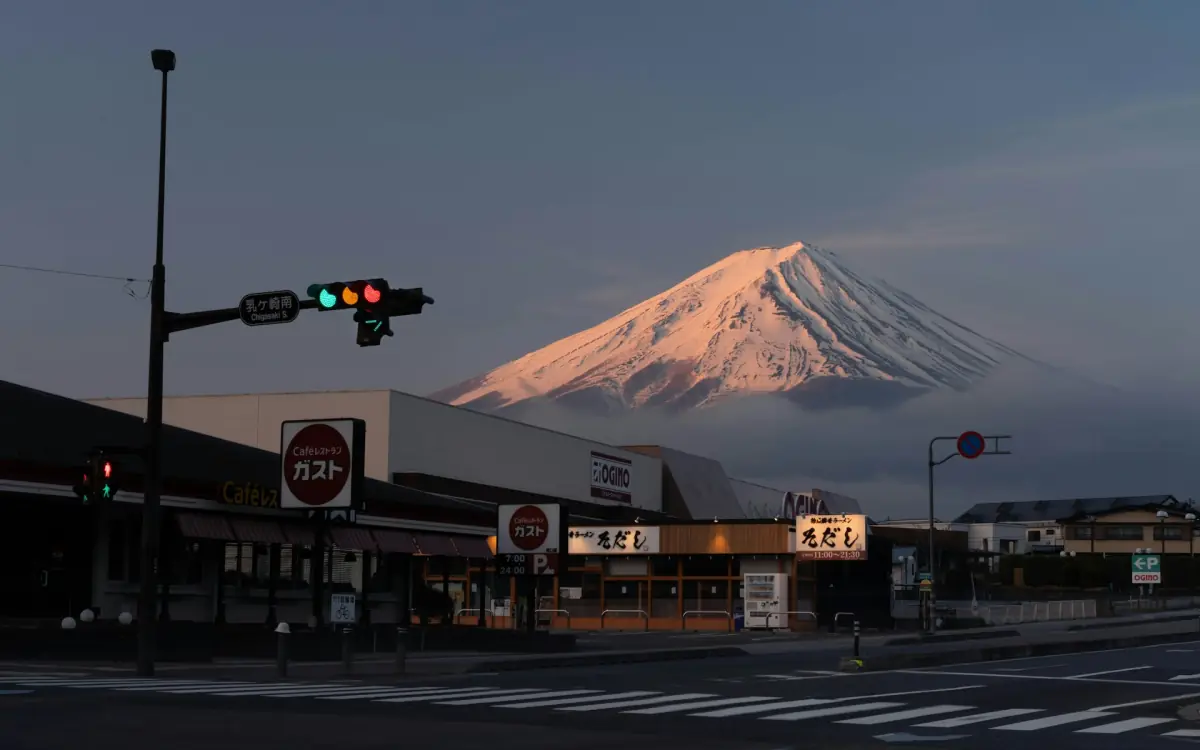
Mount Fuji sunrise tours start with the viewpoint
Mount Fuji sunrise tours at the mountain foot are landscape visits. The aim is to watch the mountain as the light changes, rather than to see dawn from the summit. Start by choosing which kind of experience you want: a low-level viewpoint and onward sightseeing, or a separate summer climbing itinerary. An early departure by itself says little about the actual viewing location.
A successful plan leaves room for weather, getting to the departure point and returning afterwards. For a broader selection of places to watch the mountain, use the Fuji viewpoint comparison; for the mountain route itself, go to the climbing guide.

Our picks: Fuji area tours
Hand-picked tours, booked through GetYourGuide. Prices are indicative starting prices in US dollars (as of October 2026). Tap a tour for live availability and the current price in your currency.

Fuji area coach outing
- Professional English-speaking guide
- All taxes, parking fees, toll fees, gas fees, and environmental fees
The Saiko village ticket is a limited-time free offer.
Check availability →
Lake and foothills day trip
- Tour guide
- Round-trip transfers from the meeting point
Check luggage fees and child eligibility in advance.
Check availability →Fuji landscape visits
Choose a regional landscape outing by its departure point and included transport, then plan the viewing conditions separately.
Timing the outward and return journey
As programme examples, a Tokyo departure at 03:00 pairs a lakeside sunrise visit with return around midday and a listed duration of eight hours. A departure at 03:30 adds a spring-pond visit, with return around 13:00 and a listed duration of nine hours. Both use a private air-conditioned van for up to six, with a driver-guide, address pickup and drop-off within Tokyo's 23 wards, water, fuel, tolls and parking. Breakfast and other meals cost extra. Viewing stops and any replacement programme depend on weather; these schedules are programme descriptions rather than a viewing guarantee.
Arrange transport around the intended viewpoint and the pickup address. A departure from Tokyo and a local start near the mountain put different demands on the night before. Keep the exact meeting time, collection area and return location together when comparing an itinerary. Avoid placing an immovable connection immediately after the advertised return, because traffic and the weather can change how the day unfolds.
Bring food or set aside a separate breakfast budget rather than relying on the word breakfast in a tour title. Judge meals, drinks and paid activities by the actual inclusions. The early mountain-foot format should be assessed for the journey it provides, with the viewing conditions treated as part of the outdoor experience.
Lake Kawaguchi as a viewing setting
The lakeside offers a different setting from an upper mountain trail: the subject is Fuji across the surrounding landscape. Plan the viewpoint and access using Lake Kawaguchi. Keep this choice distinct from arranging a mountain hut or paying a climbing access charge. A dawn landscape outing does not require turning the rest of the day into an ascent.
For independent travel from Tokyo, the direct highway bus and the Fuji Excursion railway are regional access choices. Their regular services should be matched to the actual viewing plan rather than assumed to deliver a predawn arrival. The getting-there guide explains the main approaches; accommodation near the mountain can be another planning choice when the preferred viewing time comes before a convenient connection.
Oishi Park and a restrained onward plan
Use Oishi Park for the lakeside landscape element. Choose it as part of the morning setting rather than promising a particular flower display. The municipality announced in June 2026 that the former Herb Festival would no longer be held from that year, so old festival calendars should not decide a sunrise itinerary.
Leave time to enjoy the place instead of collecting too many distant stops. A single follow-on visit can make the morning feel complete even when Fuji remains partly covered. The decision is about the scenery and pace you want, rather than a guarantee of a clear mountain or a particular colour in the sky.
Oshino Hakkai after the viewing stop
If the onward route includes the spring-pond area, use Oshino Hakkai for the local visit. Respect the water and residential setting. The village's July 2026 environmental notice describes damage caused by coins thrown into the ponds, so keep coins out of the water and follow local instructions.
Combining a quiet viewing stop with a later cultural or landscape visit gives the day more than a single photograph to depend on. Compare the full day-trip plan from Tokyo when deciding whether the early start suits your overall schedule.
Weather, visibility and summit sunrise
Neither clear Fuji views nor a universal ideal viewing time can be promised. Climate averages describe a season, while cloud and conditions determine the individual morning. Carry suitable warm and rain clothing and agree a workable lower-level alternative for poor conditions. See the seasonal planning guide for choosing a month by purpose.
Summit sunrise belongs to a separate mountaineering plan. The mountain authorities warn about congestion below the summit before dawn and risky overtaking. Plan such an ascent only in the officially opened season; avoid climbing outside it. A mountain-foot morning remains its own worthwhile landscape experience.
Questions about your visit
Does sunrise viewing involve climbing Fuji?
A foothill viewing visit stays in the surrounding landscape. A summit ascent requires its own seasonal access and mountain preparation.
How does a sunrise outing differ from an early photo trip?
Look for the intended sunrise viewpoint and timing in the programme. An early photo outing can have a different purpose.
What if clouds cover the mountain?
Keep another landscape or cultural stop in the day and allow the programme to adapt to conditions. Clear views are weather dependent.