Understanding Mount Fuji history
Mount Fuji history is closely tied to the ways people have worshipped, approached and pictured the mountain. A visit focused only on the summit silhouette misses part of that story. Pilgrimage routes, shrines, Oshi lodging houses and sacred natural features form a cultural landscape. They connect the mountain to communities at its foot and help explain why places away from the summit matter to a visit.
In 2013, UNESCO inscribed Fujisan as a cultural World Heritage property with 25 component sites. Its recognised value joins sacred associations with artistic inspiration. It is therefore useful to think of several connected places rather than a single monument. The Fuji facts guide covers the physical mountain; this page follows its cultural meaning and offers a way to choose what to look for on the ground.

Pilgrimage and the landscape
Pilgrimage gives the landscape a human scale. Routes, shrines and Oshi lodgings belong to the heritage story alongside the mountain itself. When choosing a cultural visit, ask whether you want to see a shrine, understand the relationship between water and the mountain, or explore a viewpoint made familiar through pictures. These are related interests, but each deserves time rather than being treated as a background to a quick photograph.
A present-day sightseeing journey can introduce this setting without reproducing a historical pilgrimage. Keep the cultural meaning of a place separate from the transport format used to reach it. The things to do guide helps combine a shrine or museum with landscape stops. For the practical demands of reaching the upper mountain, use the separate climbing guide and plan only in the officially open season.
Our picks: Fuji area culture
Explore the area with an English- or Chinese-speaking guide.
Hand-picked tours, booked through GetYourGuide. Prices are indicative starting prices in US dollars (as of October 2026). Tap a tour for live availability and the current price in your currency.

Cultural landscapes on a sightseeing journey
A bus visit introduces parts of the Fuji setting with an English- or Chinese-speaking guide. Pagoda and seasonal stops depend on the selected programme; lunch is optional.
Sengen Taisha and Wakutamaike
Fujisan Hongū Sengen Taisha stands in Fujinomiya and is one of the World Heritage components. It is a central shrine of Fuji worship. The city connects Sengen shrines with reverence for the mountain and the calming of its eruptions. This setting makes the shrine a useful focus for visitors who want to understand why the mountain is a sacred place, rather than simply see a recognisable outline.
Wakutamaike is the spring-fed pond within the shrine grounds. Looking at the water beside the buildings brings a sacred natural feature into the same visit as architecture. Take time to observe the setting quietly and follow local instructions. Avoid assuming that a general sightseeing circuit includes this particular shrine: choose the route around the places you intend to visit and arrange the southern journey accordingly.
Sengen-zukuri architecture
The shrine has a two-storey honden in the Sengen-zukuri style, roofed with hinoki bark and protected as an Important Cultural Property. The form of the building is a concrete detail to look for during a cultural visit. Observe its structure as well as its colour and position in the grounds. Architecture provides a different point of attention from the distant mountain view, and a reason to slow down.
Give worshippers space and follow signs governing photography. JNTO guidance encourages a bow at the entrance, cleansing at the water basin and quiet behaviour. Do not run through the grounds or treat them as a stage for a photograph. A shrine visit can be meaningful even without a clear view of Fuji, because the relationship with the mountain is cultural as well as visual.
Mount Fuji art: Hokusai and Hiroshige
Hokusai and Hiroshige helped shape the international image of Fuji through their woodblock prints. Their representations also influenced Western art. This is part of the mountain’s World Heritage significance, alongside pilgrimage and worship. The artistic story is therefore more than a collection of attractive views: it explains how a local sacred mountain became a widely recognised image.
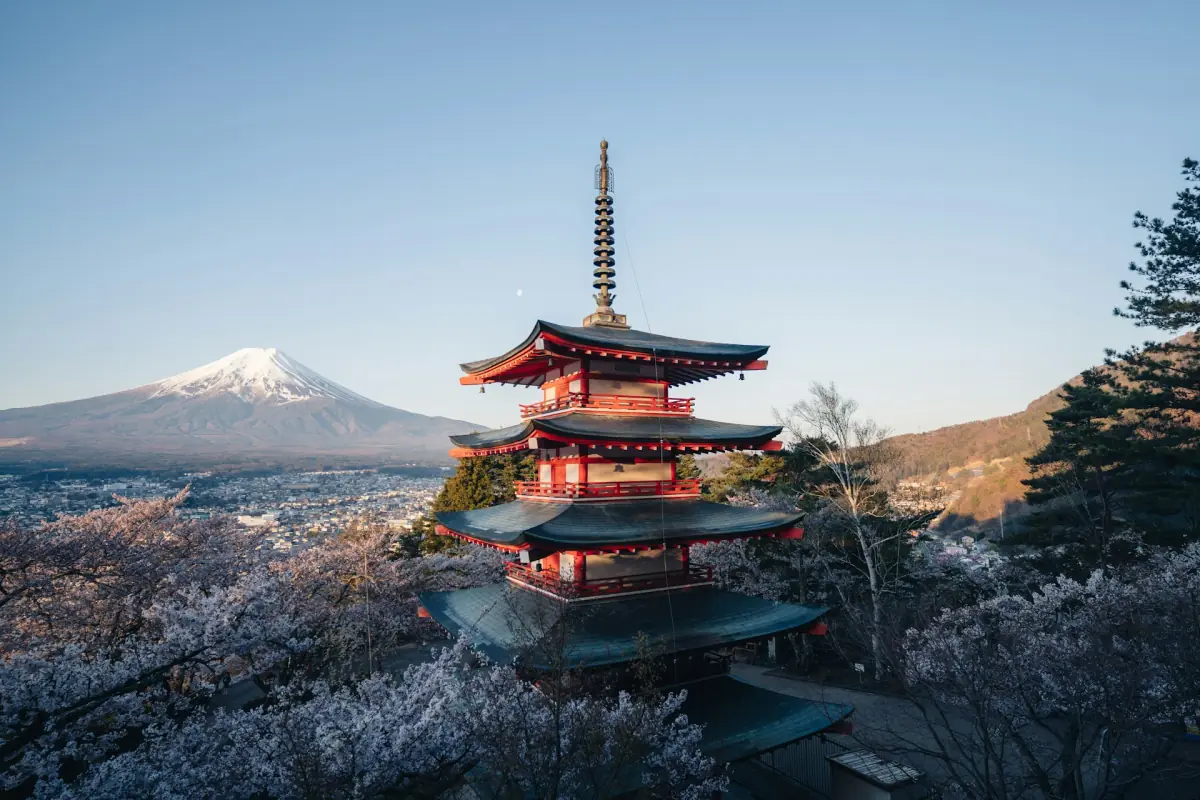
When visiting a viewpoint, consider the way the mountain relates to the foreground, buildings and water. That is a useful way to look more attentively without expecting a modern visit to reproduce a particular print. For a concrete viewpoint with a pagoda, see Chureito. Its visitor planning belongs to the monument guide rather than a general account of Fuji art.
Textile art and cultural activities
The Kubota Itchiku Museum offers a further cultural focus through textile art. Its tea room serves matcha and Japanese sweets with a view of the Ryumon waterfall. Choose a museum visit for the works themselves and treat tea as a refreshment stop. It is not a formal tea ceremony. If you prefer making something, compare the practical workshop formats in the tour guide and leave sufficient time for participation.
Questions about your visit
Is Fuji a natural World Heritage property?
Fujisan was inscribed as cultural World Heritage in 2013, with 25 component sites. Sacred associations and artistic inspiration explain that recognition.
Where is Sengen Taisha?
Fujisan Hongū Sengen Taisha is in Fujinomiya. Its grounds include the Wakutamaike spring pond, and the shrine is a World Heritage component.
Does a sightseeing trip include a specialist art tour?
Choose the sightseeing programme for its listed stops and guide language. For time focused on artworks, plan a museum visit as a distinct part of your day.