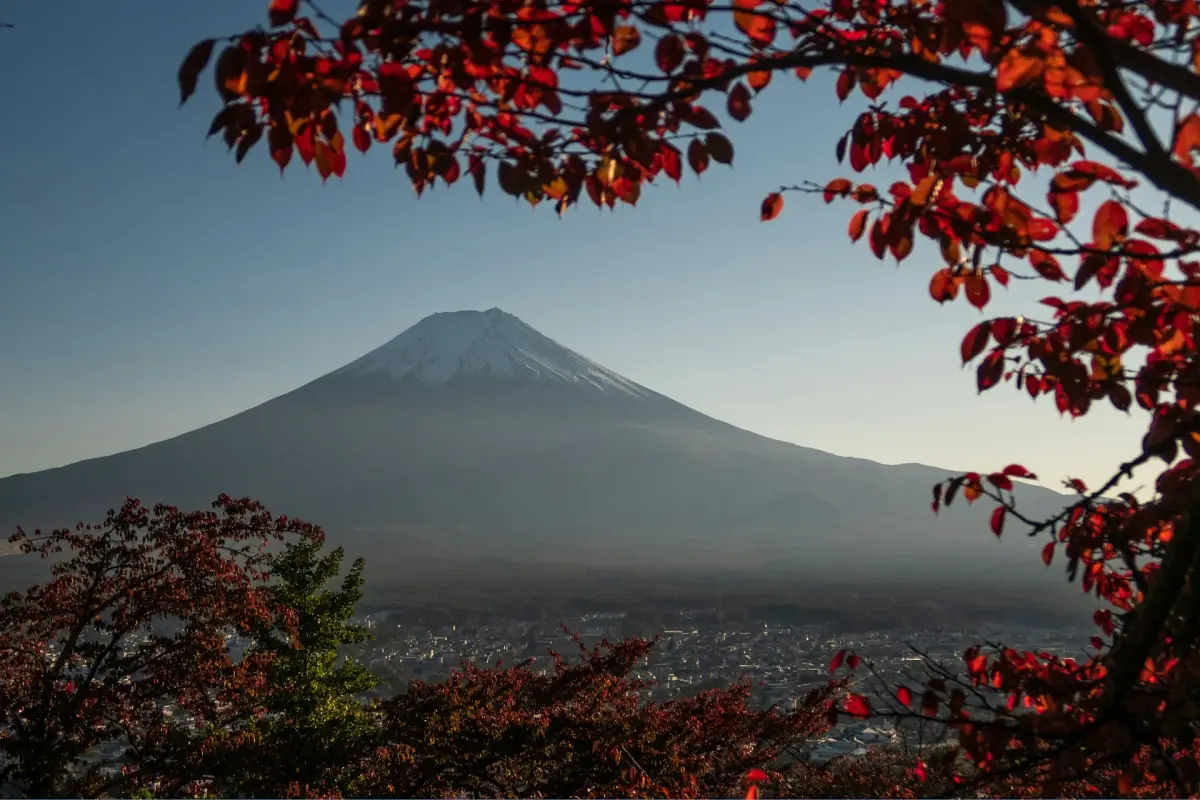
Choosing things to do in Mount Fuji
Things to do in Mount Fuji make more sense when grouped by landscape, culture and the effort involved. Fujisan is a mountain surrounded by different visitor areas, rather than a single attraction with one entrance. A viewpoint, a shrine visit and a summit climb require different plans. Start with the experience that matters most, then arrange transport around it instead of trying to collect every familiar photograph.
For a first landscape visit, compare the Fuji viewpoints and choose a main stop. For cultural context, follow the history of the sacred mountain. A visit to the fifth station is another possibility when road conditions permit; it is a mountain sightseeing stop rather than a climb to the summit. Keep time for walking and looking, as well as the journey.

Chureito and Shiraito Falls
The Chureito Pagoda in Arakurayama Sengen Park combines a built landmark with a view over Fujiyoshida. The local tourism organisation describes 398 steps to the observation platform. That makes it a choice for visitors comfortable with stairs, rather than an interchangeable roadside photo stop. A clear view of Fuji still depends on conditions, so appreciate the setting even when cloud covers the mountain.
The Shiraito Falls offer a different kind of landscape on the Fujinomiya side. Much of the water comes from Fuji springs, and the falling streams spread across a wooded rock face. Choose this for the water and woodland setting rather than a guaranteed mountain panorama. Keep out of the waterfall basin: protecting the heritage landscape takes priority over entering the water.
Our picks: Fuji area sights
This guided outing includes round-trip transfers.
Hand-picked tours, booked through GetYourGuide. Prices are indicative starting prices in US dollars (as of October 2026). Tap a tour for live availability and the current price in your currency.

Foothill sightseeing by road
A regional sightseeing trip can connect landscape and cultural stops. Read the route and inclusions alongside your chosen focus for the day.
Museums, textile art and tea
The Kubota Itchiku Museum displays textile art and gives a cultural focus to a day otherwise centred on outdoor scenery. Its tea room serves matcha and Japanese sweets overlooking the Ryumon waterfall. Treat this as a museum visit with an optional refreshment stop; a tea room visit is different from a formal tea ceremony. Allow time to look at the works rather than fitting the museum into a brief photo break.
Museum admission belongs to the particular institution. A ticket for a different museum does not provide admission to Kubota. Use the museum calendar for your date, especially when planning around an exhibition. For a broader mix of cultural experiences and cooking formats, the tour overview is the place to compare activities. Workshops fit a focused day better than a rushed circuit with many distant stops.
Forest walks and caves
Forest and cave excursions are another activity format around Fuji. Choose a route according to its own walking conditions, equipment and meeting point, rather than treating a cave outing as preparation for the summit. Mountain access and a regional walk involve different planning. Keep to marked paths, leave plants and volcanic stones where they are, and carry rubbish away. Build the day around the activity you actually intend to do.
Fuji-Q Highland
Fuji-Q Highland is an amusement park option for a day centred on rides. Admission to the grounds is free, with a free admission ticket available; rides cost extra or use a pass. Prices depend on the visit date. This is a different use of your time from shrine visits or a landscape circuit, so choose it deliberately rather than adding it as an incidental stop.
Lake Kawaguchi and Oishi Park
For lake-based activities and the regional self-drive experience, continue with Lake Kawaguchi. The lakeshore is its own destination. Oishi Park covers the park and its planting. These places can form the focus of a northern day; leave room to enjoy them instead of adding every southern sight.
Oshino Hakkai
Use Oshino Hakkai for the spring ponds and village setting. Protect the water by keeping coins out of the ponds, and respect residents when photographing local streets. A combined trip can include a short visit, while a more focused day gives you time to understand the place.
Lake Ashi and Owakudani
Lake Ashi and Owakudani belong to the Hakone part of a regional journey. If combining them with Fuji, use the Fuji and Hakone guide to assess the travel commitment. A northern Fuji day and a combined Hakone journey serve different priorities.
Questions about your visit
Do I need to climb Fuji to enjoy the area?
A foothill visit can focus on viewpoints, shrines, waterfalls or museums. Plan summit climbing only within the officially open season; avoid climbing outside it.
Which choice involves stairs?
Chureito has 398 steps to its observation platform according to the local tourism organisation. Choose it with the walking effort in mind.
What can I do when Fuji is hidden?
A museum or shrine gives the visit a subject beyond the distant view. Local conditions still determine which journeys and activities are practical.